

When AI Works, the Harder Questions Begin
September 2, 2026 | 7 min read | Leadership in Practice
Share



Michael Low
Founder & Director, SENSE Collective

Why scaling AI is as much a leadership challenge as a technology one.
Over the past year, much of my work with organisations on AI has moved beyond the question of adoption. The organisations I work with are no longer asking only, “What can generative AI do for us?” They are experimenting, building capability, identifying use cases and, increasingly, trying to move successful initiatives beyond the pilot stage.
That is where I have noticed the conversation changing. The early questions tend to be about possibility: Which tools should we use? Where can we automate? How do we encourage adoption? But once AI starts working, the questions become more difficult. How do we scale without allowing costs to run ahead of value? How do we maintain reliability as AI touches more workflows? And who decides what AI should - and should not - be trusted to do?
Key Takeaways
Scaling AI brings new challenges around cost, reliability and accountability.
AI capability should match the task, not every task needs the most powerful model.
Clear ownership is essential as AI expands across workflows.
Start with the workflow, not the technology.
Human judgement must remain where decisions carry greater risk.
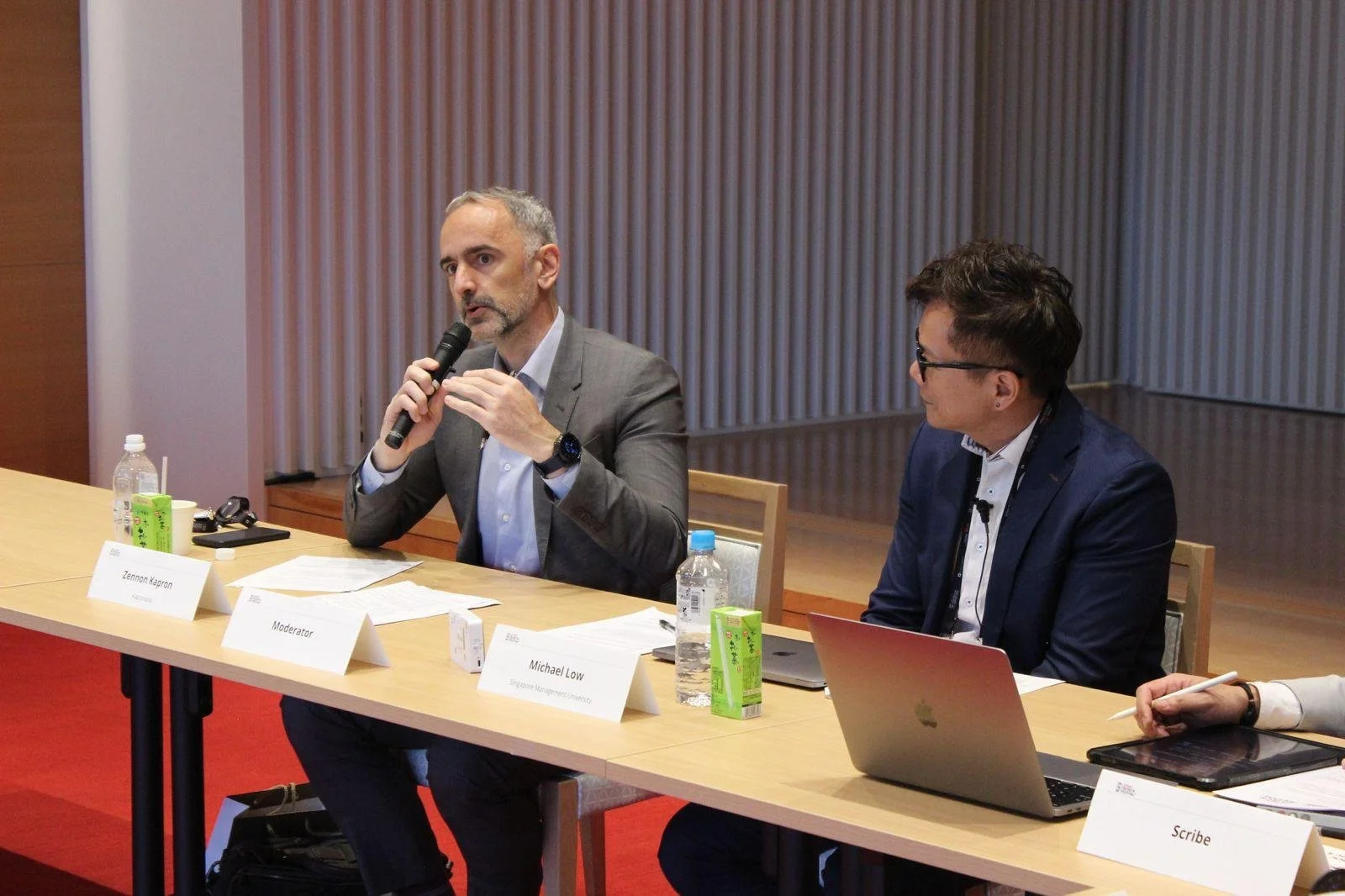
In a recent discussion at a global think tank with senior leaders from Fortune 500 companies, one question captured this shift particularly well: “How do we control cost while maintaining reliability at scale?” It is a tension I am seeing increasingly in my own work. And I have come to believe that framing cost and reliability as a simple trade-off misses the deeper issue.
What works in a pilot does not automatically work at scale
A pattern I encounter in my consulting work is that organisations become understandably excited when an AI pilot delivers results. A team finds a useful application, demonstrates that it works and the natural response from leadership is: “How do we scale this?” But scaling changes the economics and the organisational dynamics. A solution used by a small group becomes something that may eventually touch hundreds or thousands of employees. Other functions identify opportunities of their own. More workflows become candidates for automation, and decisions about models, tools, governance and human oversight multiply.
At that point, I often find that organisations are still asking a technology question: “Which AI should we deploy?” I have found it more useful to start with the work. Consider two tasks. One involves processing large volumes of predictable information according to relatively clear rules. The other involves interpreting an ambiguous situation where an incorrect answer could have material consequences. There is little reason why both should require the same model, cost structure or degree of human oversight.
For routine, high-volume work, smaller, faster and cheaper models may be entirely adequate. For judgement-heavy or high-stakes work, a more capable model, stronger verification and greater human oversight may be justified. This has led me to a simple principle in my work with organisations: reliability should be designed around the task, not assumed from the model.
Once you approach the problem this way, cost and reliability stop looking like opposing objectives. Using the most powerful model for every task can be unnecessarily expensive, while using insufficient capability or oversight for consequential work introduces risk. Both problems begin with the same failure: not being precise enough about what we are asking AI to do.
The conversation usually leads somewhere else
What I find interesting is that once I start working through tasks and workflows with an organisation, the discussion rarely stays focused on technology. It quickly moves to ownership.
IT may own the infrastructure. Procurement may own the commercial relationship. Business leaders understand their processes. Risk and compliance determine acceptable boundaries. HR is often responsible for capability development.

Yet when we get down to the level of an individual workflow, the answer to a deceptively simple question can be surprisingly unclear: Who decides what AI is allowed to do here? Who determines that one task can be automated while another requires human verification? Who decides what level of model capability is sufficient? Who determines when an AI-generated recommendation becomes a human decision? And who remains accountable when something goes wrong?
The ambiguity is often manageable during experimentation. Small teams compensate for it. People know whom to call, exceptions can be dealt with manually and senior sponsors can intervene. Scaling exposes it.
I have come to describe this as decision-rights debt: organisational ambiguity that accumulates during experimentation and only becomes visible when AI begins moving across functions and workflows.
The pattern can be subtle. One function finds a tool that works, another develops its own solution, and a third begins automating a related workflow. Individually, each decision may make sense. Collectively, however, the organisation can end up with fragmented tools, inconsistent controls and different assumptions about what AI is authorised to do. The scaling issue then is no longer simply technological; it becomes a question of operating model and accountability.
AI can automate organisational ambiguity
I think this becomes even more important as organisations begin exploring agentic AI. With generative AI used as a personal productivity tool, the human is usually visibly in the loop. With agents executing multiple steps across a workflow, the boundaries become less obvious. In the work I do with organisations, I increasingly encourage teams to establish four things before an agent moves into production: a defined owner, a decision boundary, an escalation path and a measurable success metric.
These may sound like governance considerations, but I see them fundamentally as leadership questions. They force an organisation to decide how much authority it is prepared to delegate, where human judgement must remain and who carries accountability when the system encounters something unexpected.
One of the lessons I have taken from this work is that AI does not fix organisational ambiguity. It can automate it. If responsibilities are unclear before AI enters a workflow, connecting more tasks and allowing technology to act with greater autonomy does not resolve the ambiguity. It can simply allow the consequences to travel further and faster.
I now start with the workflow
This has changed the way I approach AI transformation with organisations. Increasingly, I resist starting with the tool. Instead, we start with a workflow and break it down task by task. Which activities are largely rule-based and which require judgement? What are the consequences if AI gets something wrong? Where does human verification need to remain? And, critically, who owns the decision at the end? Only after those questions become clear does it make sense to determine the appropriate technology.

The sequencing matters. In my experience, organisations often do many of the right things - develop policies, build capability, map processes and invest in infrastructure - but still struggle because they do them in the wrong order. Mapping the workflow before choosing the tool creates a very different conversation from selecting a platform and then looking for processes to automate with it.
It also changes the conversation about cost. Instead of asking how to make AI cheaper across the enterprise, leaders can ask where greater intelligence is actually worth paying for and where simpler capability is sufficient.
What I am learning about the next phase
The first phase of enterprise AI has largely been about experimentation and adoption. Leaders needed to create space for people to try the technology, build confidence and discover where value might lie. From what I am seeing in my work with organisations, the next phase will require a different leadership capability: discernment.
Leaders will need to distinguish between what can be automated and what should be automated; between tasks where cheaper intelligence is sufficient and decisions where greater capability is worth paying for; and between places where AI can act independently and those where human judgement and accountability must remain explicit.
This is why I increasingly think that the organisations that scale AI well will not necessarily be those with the most sophisticated models or the largest AI budgets. They will be those that become better at making deliberate choices about where intelligence creates value, where reliability matters most, and where human judgement must remain.

The Fortune 500 conversation began with a question about controlling cost while maintaining reliability. My work with organisations has led me to reframe it slightly. The question I would now put to a leadership team is: Which decisions in your organisation deserve your most expensive intelligence, and which simply don’t?
How clearly an organisation can answer that question may tell us more about its readiness to scale AI than the technology it has chosen.
Michael Low
Founder & Director, SENSE Collective
AI transformation, capability design and workforce readiness across Southeast Asia